
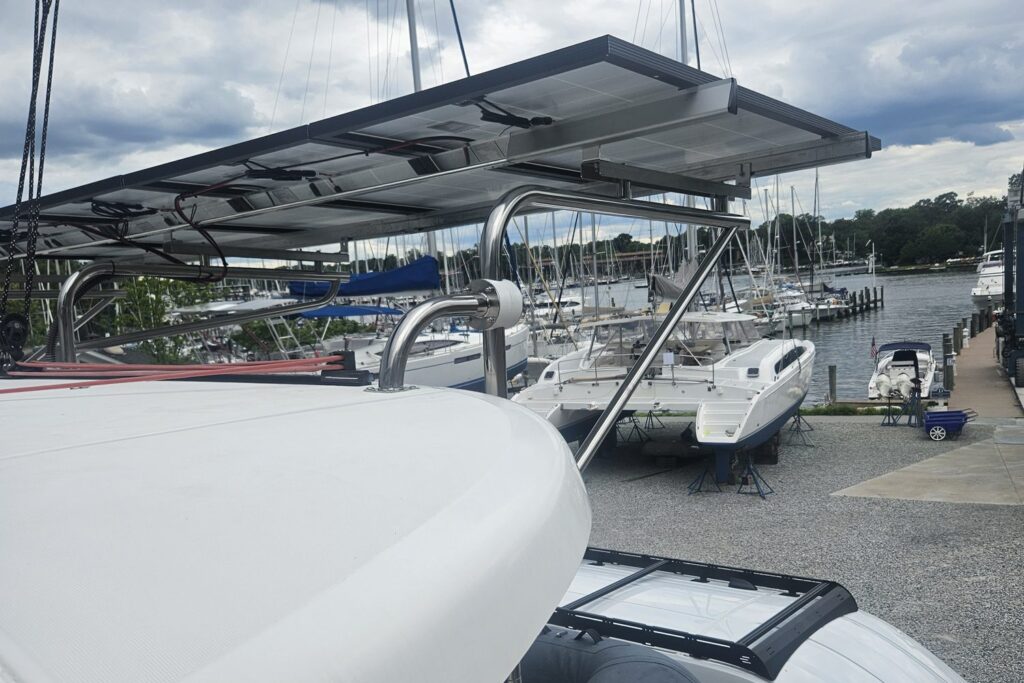
Solar Arch Sizing for Cruisers: Panels, Power and Weight
A solar arch is the easiest way to give a cruising boat real charging power without giving up deck space. Before you buy one, it pays to size three things: how much power you need, how many panels physically fit, and how much weight the arch will carry. Here’s how to work through each.
1. Estimate your daily energy use
List everything that runs off your house bank (fridge, autopilot, instruments, lights, fans, electronics) and estimate the watt-hours each uses in a day: watts × hours of use. Your battery monitor will give you better numbers than guesses if you have one. The total is the daily energy your panels need to replace, plus some extra for cloudy days.
2. Turn that into panel watts
A common rule of thumb is that a panel delivers about its rated watts × your local peak sun hours × 0.7 to 0.8 in watt-hours per day, after losses for heat, shading and the charge controller. Sun hours vary a lot by latitude and season, so check a solar map for where you cruise. Divide your daily need by the output per rated watt to get the panel watts to aim for, then round up. Your panel supplier or marine electrician can refine the numbers.
3. Check how many panels fit
This is usually the deciding factor on a boat. Martek’s Solar Arch comes with standard 108-inch panel rails, which hold three panels up to 35 inches wide. Each panel clamps to the rails with hidden end clamps and bonding clamps between panels, and the first and last panels need at least 1 inch of setback from the rail ends. When you shop for panels, compare their width and length with the rail length and the beam of your stern. Longer rails are available for bigger arrays, so send us your panel sizes and we’ll confirm the fit.
4. Check the weight
Add up everything the arch will carry: panels, mounts, any antenna, and, on an arch with davits, the dinghy, outboard, fuel and gear. The Solar Arch is rated up to 600 lbs. The Solar Arch and Davits is rated up to 800 lbs total (400 lbs per arm), and that figure includes the panels. Remember that motion in a seaway multiplies the load on the stern rail, so leave a margin.
5. Plan for Starlink and other gear
Many cruisers now carry a Starlink dish. The Starlink Antenna Mount fastens to the arch’s panel rail track, so the dish can sit beside your panels. Plan its position so it doesn’t shade the panels for long parts of the day.
6. Make sure your stern can carry it
The arch clamps to 1.0 or 1.25-inch stern rails, and its lower mounts through-bolt to the deck, transom or swim platform with backing plates. Before you install, push firmly on the stern rail. If it moves fore-and-aft or side-to-side, add Rail Support Arms. Connect the arch to your boat’s bonding system, and use the grounding lugs on the panel rails.
Smaller arrays: panels on your davits
If one or two panels will do, you may not need an arch. Martek Solar Panel Mounting Brackets and the Davit Solar Panel Tilt Mount Kit (with 72-inch rails and 15-degree tilt steps) mount over the stabilizing strut on any Martek davits with no extra drilling.
Get a recommendation
Send us your panel choice, your boat model and photos of your stern, and we’ll recommend the right arch or mount. For wide sterns and catamarans we build custom spans, like a 154-inch arch for a Lagoon 42. See our solar arches, custom products, or contact us.